Edwardsville, IL · Garage Door Service
Openers, Power Outages, and the Houses Edwardsville Actually Has
Edwardsville's housing stock dates mostly to 1949-2000, median 1966, and cold-climate power outages hit older garage door openers hard. Here's what that means for your door.
- Repairs & new doors
- Springs & openers
- Serving 7 nearby communities
When It Stops Being a DIY Job
Most garages around here were built between 1949 and 2000, with the median landing around 1966. That matters because a lot of those openers have been swapped out once already, sometimes twice, and the bracket, header, and wiring behind the unit are still the originals. If your opener quit during a cold snap and you're staring at a chain drive with a cracked gear or a logic board that won't take a signal, that's past the point of a quick fix with a screwdriver.
Swapping a bulb or resetting the travel limits, fine, do that yourself. But if the door won't move after a power outage and the opener motor hums without turning anything, you're looking at a stripped gear or a fried circuit board, and on a house with 1960s-era framing, the header bracket itself may need a look before a new unit goes up. That's a job where guessing costs you a second visit.
We'll also say plainly: if your opener is old enough that parts aren't made for it anymore, we're not going to pretend we can keep nursing it along. At some point replacement is the honest answer, not another patch.
How Local Conditions Play In
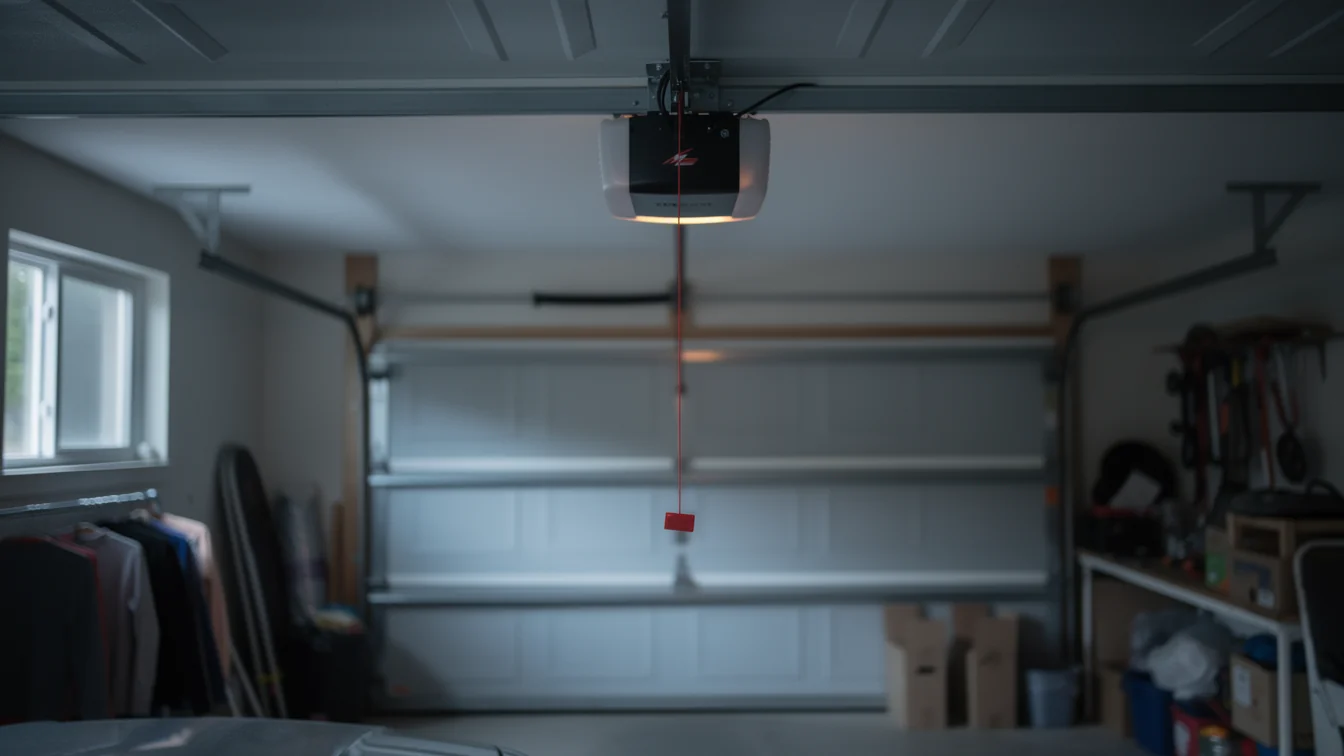
This area sits in a cold, moderate climate band, which means winter brings the kind of freeze-thaw cycling and occasional ice-loaded power lines that knock out electricity for a stretch rather than a flicker. When the power drops, a garage door opener with no battery backup just stops wherever it is, often half-open, and a steel door left in that position overnight in freezing temps can let an opener's drive gear sit under load it wasn't built for.
On the 1960s-70s housing stock that makes up most of this area's garages, insulation in the door and the garage itself is often minimal by current standards, so a dead opener during a cold outage isn't just an inconvenience, it's an open gap into the house for a night or more. Manual release cords work, but on original hardware from that era, the release mechanism itself can be stiff or missing its pull handle entirely after decades of disuse.
We don't install whole-house generators or rewire your panel. What we do deal with is the opener side: battery backup units that keep the door operable through a cut, and making sure the release mechanism on an older door actually works when you need it, not just in theory.
What You Pay
We don't have a flat number to hand you here, because what you pay depends on what's actually wrong and what's behind your current opener. A straightforward opener swap on a house with intact 1960s-era wiring and a standard header is a different job than one where the bracket needs reinforcing or the door itself is original and heavier than modern steel.
With median household income in the area around $66,469, we try to be straight about what's worth fixing versus replacing rather than running up a bill on a unit that's already near the end of its life. If your opener is original equipment from a house built in that 1949-2000 window, you're often looking at a unit old enough that sourcing exact parts costs more in time and money than a new opener with battery backup built in.
We'll give you the real number for your situation before any work starts, not an estimate pulled from a different job.
The Problem
Here's the pattern we actually see: a house from the 1960s-70s stock that makes up most of this area, original or second-generation opener, no battery backup, and then a winter power outage that catches the door open or half-open. The owner either forces it by hand on hardware that hasn't been exercised in years, or leaves it and hopes the weather holds.
Neither is a great spot to be in. Forcing an old release mechanism can snap a worn cable or bend a track that was already slightly off-square from decades of settling, which is common on houses from that era. Leaving the door open invites cold air and whatever else wants in.
The fix isn't complicated: a working manual release, an opener with backup power if the budget allows it, and a door and track that are actually square and lubricated going into winter. We can check all three in one visit. What we can't do is promise a part for a decades-old opener will still be manufactured, so sometimes the honest recommendation is to stop chasing parts and replace the unit.
Frequently asked questions
Why does my opener fail during a power outage instead of just not working?
Most openers have no battery backup, so when power outages, the motor stops wherever the door was, often mid-travel. On older homes in this area, from the 1960s-70s building wave, the manual release cord is also frequently stiff or missing its handle, which turns a simple manual lift into a struggle.
Is my opener too old to repair?
If it's original equipment from a house built in the 1949-2000 window common here, parts can be hard to source. We'll check before quoting a repair, but often a new opener with battery backup costs about the same as chasing parts for a discontinued unit, and it's more reliable.
Does cold weather actually affect garage door openers here?
Yes. The cold, moderate climate band this area sits in means freeze-thaw cycling and ice-related power interruptions are routine in winter, and a dead opener during one of those cuts leaves a door stuck open on houses that often have minimal garage insulation from their original 1960s-70s construction.
Related garage door services in Edwardsville
More garage door guides
Book garage door service in Edwardsville
Call now or request a quote - tell us what the door is doing and where you are.