
Edwardsville, IL · Garage Door Service
Garage Doors on Edwardsville's Older Housing Stock
A look at why doors on Edwardsville's 1949-2000 housing stock fail the way they do, what the cold-moderate climate adds to that, and when a repair call beats a DIY fix.
- Repairs & new doors
- Springs & openers
- Serving 7 nearby communities
When It Stops Being a DIY Job
Most houses in Edwardsville were built between 1949 and 2000, with a median year of 1966, and that one number explains a lot about what's behind the door you're looking at. A huge share of doors in this town are original or one upgrade removed from original - one-piece doors on side-mounted torsion hardware, sectional doors with overhead extension springs, or early chain-drive openers bolted to joists that have had sixty years to shift.
You can handle lubricating rollers and hinges, tightening loose bolts on the track, swapping a dead remote battery, or resetting a photo-eye after a bump. You should not handle a broken torsion spring under tension, a track pulling away from the jamb, or a cable fraying near the drum. On a house from that 1949-2000 run, spring and cable sizing often doesn't match anything on a parts shelf today, so guessing wrong can bend a section or take a finger.
That's the actual line: once a spring, a cable, or the opener's drive gear is involved on a door this old, it stops being a weekend project and becomes a call.
How Local Conditions Play In
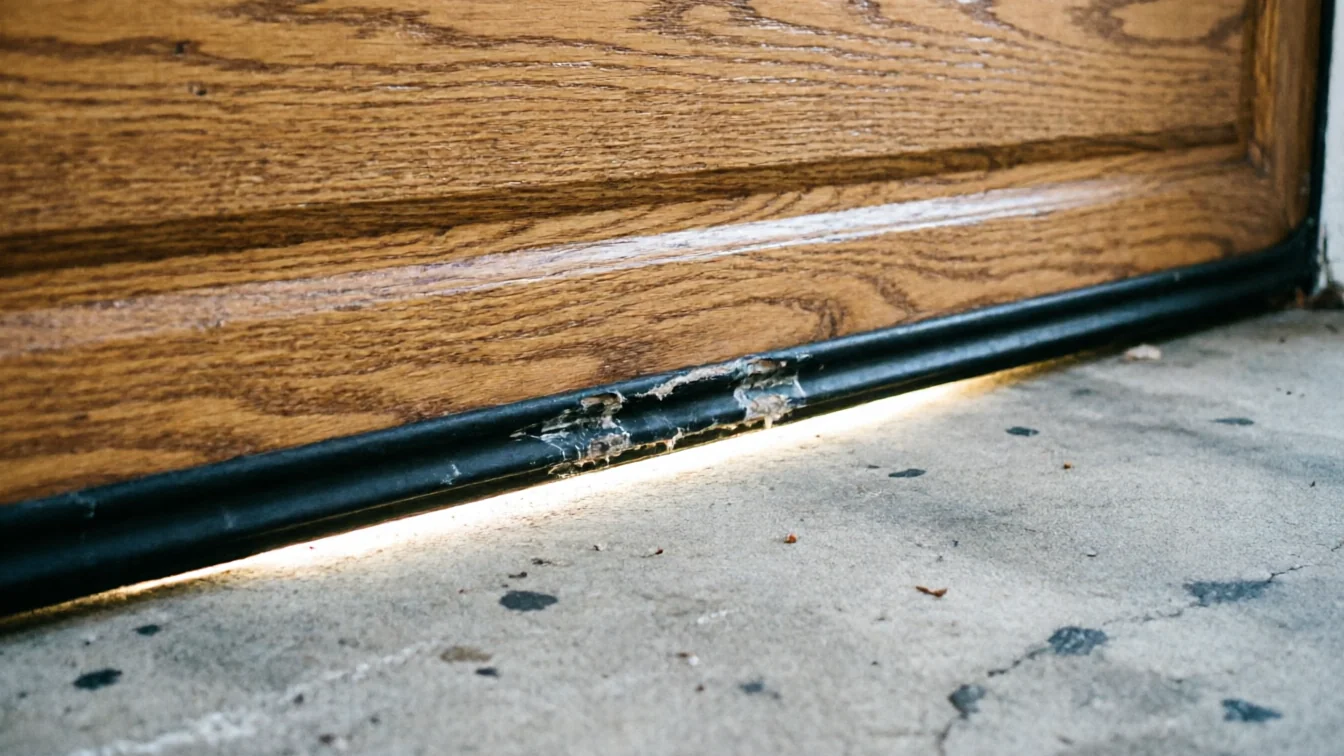
Edwardsville sits in a cold-moderate climate band, which means real temperature swings across the year, not extreme ones, but enough to matter on a frame that's decades old. Steel sections built before insulation standards tightened flex more as metal contracts in cold weather, and on doors from that 1949-2000 era, the weather seals and drafts along the bottom panel and between sections are usually the first thing to fail.
Drafts matter here because a cold-moderate band loads an unheated garage with outside air every time the temperature drops, and that air sits against whatever's stored against the shared wall with the house. Across the roughly 33 named areas of this region, the housing is mostly 1960s-70s stock, so this isn't a one-house problem - it's the same seal, the same hardware, the same age, repeated street after street.
Cold also stiffens grease in an opener's gearbox and slows older motors enough that travel limits drift and need re-adjusting most winters. None of this calls for a different door design. It calls for someone who checks seals and spring tension before the cold sets in, not after a door won't close.
What You Pay
We don't have a price list to hand you here, and the honest answer is that the number depends on what's actually broken and what kind of door it is - a tract-built sectional from the 1970s costs less to fix than a custom door, and a spring swap costs less than a full opener swap. What we can tell you is what drives the number up on a house like the ones common here: parts for doors built before 2000 aren't always sitting on a shelf, so matching the right spring wind or an obsolete track profile sometimes means a second trip before the job is done.
With median household income in the area around $66,469 and roughly 51,342 owner-occupied houses dating mostly to that same 1949-2000 build window, most of what gets called in here is repair, not full replacement - the housing stock is old enough for parts to wear out, but not so far gone that most doors need to come out entirely. We'll tell you straight if a door is past the point where fixing it still makes sense, but on this stock, that's the exception, not the rule.
The Problem
The single most common call traces straight back to the build era. A door engineered for a house going up around 1966 was sized for the spring technology and cycle counts of that decade, and sixty-some years of opening and closing wear those torsion springs down past their rated life long before anyone notices a problem. What follows is predictable: a bearing plate rusts, a spring loses tension unevenly, and the door starts to hang crooked on one side before anything actually breaks.
Across the 1960s-70s stock that covers most of this area, we see the same failure order again and again - seals first, then spring tension, then the opener struggling to compensate for a door it was never adjusted to lift. One limitation worth saying plainly: we don't carry every spring size for doors this old on the truck, so some jobs need a short parts order before the repair gets finished, usually a matter of days, not weeks.
Frequently asked questions
Why do so many garage doors in Edwardsville have the same problems at the same time?
Most houses here were built between 1949 and 2000, with a median around 1966, so a lot of doors across the area are the same age, built to the same era's spring and seal standards. When one wears out on a given street, the neighbor's door is usually close behind it.
Does the cold affect my garage door here if it's not an extreme climate?
Edwardsville sits in a cold-moderate band, meaning real but not brutal swings. On an older door, that's still enough to stiffen opener grease, shrink worn weather seals, and let drafts in around the bottom panel - small issues that show up every winter on this housing stock.
Should I replace or repair an original door from the 1960s or 70s?
Most of the time, repair still makes sense on this stock - it's old enough to wear out springs and seals, not so old that the door itself has failed structurally. We'll tell you honestly if a specific door has crossed that line, but it's the exception here, not the norm.
Related garage door services in Edwardsville
More garage door guides
Book garage door service in Edwardsville
Call now or request a quote - tell us what the door is doing and where you are.